

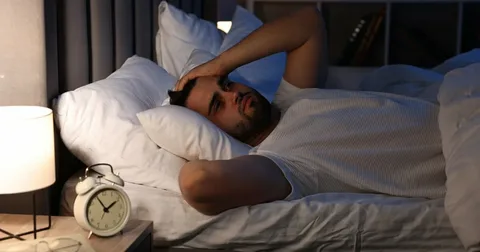
Sleep should come easily. Just close your eyes, fall asleep, and wake up full of energy. However, the truth is, this process can become a daily struggle for millions of people. Unfortunately, insomnia often becomes a vicious cycle that traps people, making it impossible to escape. Keep reading to understand how the psychological cycle keeps insomnia going.
Psychology behind insomnia
Insomnia can involve more than just falling asleep, but also waking up at odd hours and/or staying asleep, being unable to fall back asleep after waking up, or, conversely, waking up much earlier than required. However, for most, it can become a struggle that can last for weeks or even years. In older adults, many geriatric psychiatrists have found that insomnia in older adults is often associated with multiple psychiatric and medical comorbidities and poor health outcomes.
Studies show that approximately 40.0% to 25.6% of people experience this challenge at some point in their lives, although 30% to 43% experience it with frequency. It can become a major problem for some, while for others, it may last only a few nights or weeks.
This is what makes insomnia even more difficult. In this situation, a person knows they can sleep, but their mind and body don’t. Lack of sleep leads to fatigue, which further worsens the problem of insomnia.
The brain’s arousal system gets stuck
Research has shown that insomnia is often associated with over-sensitive arousal. That is, the brain remains overly active and alert instead of returning to a sleep-like state. For example, if you want your car to be cool when you park it, you have to turn it off.
Key points about brain arousal in insomnia:
- The nervous system remains active instead of calm.
- The heart rate may remain elevated during sleep.
- Body heat remains higher than normal.
- Cortisol, a stress hormone, continues to circulate.
Hyperarousal affects both the body and emotions. Distressed people often feel “tired and exhausted.” They’re on the verge of physical problems that mental alertness or thinking can’t alleviate. A sleep switch that’s failing.
It’s also been found that the brain can act as a “sleep switch,” suppressing vibrations with full energy to facilitate a smooth transition between wakefulness and sleep. In normal sleep, the switch moves smoothly from one position to the other. However, in cases of sleep problems, this switch either gets stuck or switches rapidly between wakefulness and sleep.
This is one reason why sleep studies of some people reveal that they aren’t completely asleep. Parts of their brains remain active even when they should be in deep, restorative sleep. The problematic parts of their brains were also awake during deep, restorative sleep.
When does worry become the enemy of sleep?
The most disturbing part about insomnia is creating this cycle:
- Poor sleep makes a person feel like they haven’t slept at all.
- Worry leads to overactivity during sleep.
- An active mind leads to insomnia.
- Lack of sleep increases anxiety.
This cycle becomes stronger; thus, they become more trapped in it. Note that this is a natural human response, even when it’s not their fault. The fear of unease prevents the feeling of rest. In fact, this kind of protective anxiety can make things worse.
How does the bedroom connect to stress?
People with insomnia are reported to have a negative impact on their sleeping environment. They associate their bed with insomnia, which leads to negative emotions. Experts call this bedroom conditioning.
After a few nights of lying in bed without sleep and feeling restless and frustrated, the brain associates the bedroom with those negative emotions, leading to anxiety. However, going to bed can lead to feelings of wakefulness and stress before sleep even begins.
The effort trap
Sleep is essentially an automatic process and occurs when the body and mind are at capacity. However, insomnia often causes people to try harder to fall asleep, leading to a condition called “sleep effort syndrome.” The harder someone tries to sleep, the more sleep bypasses them.
Habits that worsen insomnia
Many people exhibit behaviors that negatively impact insomnia. Thus, attempting to compensate for the inability to sleep is often a contributing factor to existing mental health issues, such as schizophrenia. Additionally, even with all the good intentions, the ongoing issue of insomnia makes it easier to be aware that this is an ongoing issue. By doing so, individuals can learn how to cope with insomnia.
Simply going to bed early in an attempt to catch up on missed sleep (“sleep debt”) will not alleviate this issue. Instead, the longer an individual is awake in bed, the less the connection between the bed and sleep. Therefore, the brain thinks of the bed as being associated with concern rather than actual sleep and/or rest.
Similarly, taking long naps throughout the day or sleeping too late in the afternoon has also been shown to interfere with the body’s natural tendency to feel sleepy at night. The body needs to be physically worn out/give itself time to become exhausted or fatigued in order to get a good night’s sleep; therefore, disrupting the body’s natural circadian rhythms makes it much more difficult to achieve a good night’s sleep.
Physical impact of insomnia
The cause of insomnia can extend beyond timing issues and can include different patterns of neurological activity throughout the day. Some individuals display significantly higher levels of high-frequency brain-wave activity throughout the day associated with alertness and information processing. This could provide evidence suggesting that insomnia may not just be a sleep-timing issue, but rather a function of how the brain functions.
Genetics and individual differences
Researchers have found that sleep problems may be genetically inherited in some people. Genealogy and twin studies involving family members of people with insomnia have shown that insomnia is a hereditary disorder. It may be considered a sign of inattention, and therefore, some people may be more careful about their sleep schedule.
Certain genes are responsible for how the brain handles stress, autoregulation, and sleep-wake cycles. These genetic factors play a key role in explaining why some people are more severely affected by insomnia than others or why some recover more easily than others.
What to do when you can’t sleep?
Breaking free from this cycle: The first step to understanding how to break it is recognizing and understanding the pattern. Many people find freedom when they realize that their insomnia may have roots that can be broken.
Hope comes from knowing that:
- The brain’s sleep system can be retrained
- Negative associations with the bedroom can be changed
- Anxiety patterns can be prevented and corrected
- Natural sleep drive can be restored
A mental health professional, such as a board-certified insomnia psychiatrist, can help with sleep therapy. Treatment focuses not only on alleviating symptoms but also on breaking the cycle just described.
The cycle of psychological insomnia may be so strong that it cannot be forgotten. But a reconditioning process and the support of others can be a cure. Recovery is a slow and tiring process, but the brain’s ability to form new patterns holds real promise for a better sleep experience.